O-Ring Materials
The dash number decides whether the part fits. The compound decides whether it survives. Fifteen standard materials, each with its continuous service band and the media it will and will not tolerate — all available in every AS568 size on this site.
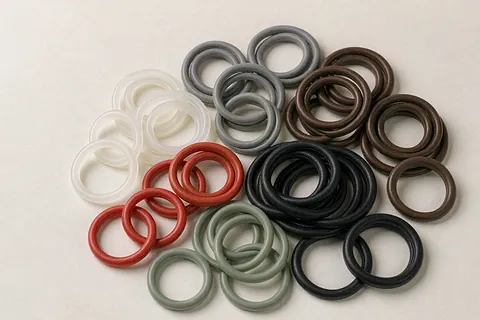
NBR — Buna-N
mineral oils, hydraulic fluid
FKM — Fluorocarbon
fuels, oils, heat
EPDM — EPDM
water, steam, glycol; never petroleum oils
VMQ — Silicone
dry heat and cold, static service
FFKM — Perfluoroelastomer
aggressive chemistry and temperature beyond FKM
HNBR — Hydrogenated NBR
oil with heat
FVMQ — Fluorosilicone
fuels at low temperature
AU/EU — Polyurethane
abrasion and high pressure
FEPM — TFE/P copolymer
steam, amines, sour gas
IIR — Butyl
gas impermeability, brake fluid and phosphate esters; never oil
ACM — Polyacrylate
hot transmission oil; poor at low temperature and in water
AEM — Ethylene-acrylic
hot automotive oil
SBR — SBR
the compound sheet governs
NR — Natural rubber
the compound sheet governs
ECO — Epichlorohydrin
the compound sheet governs
All 15, sorted by upper limit
Upper service temperature is the first filter. Medium compatibility is the second, and it is the one that catches people out — EPDM is excellent in steam and useless in oil.
| Code | Name | Min °C | Max °C | Principal media |
|---|---|---|---|---|
| NR | Natural rubber | -50 | 70 | the compound sheet governs |
| AU/EU | Polyurethane | -40 | 82 | abrasion and high pressure |
| NBR | Buna-N | -34 | 100 | mineral oils, hydraulic fluid |
| SBR | SBR | -46 | 100 | the compound sheet governs |
| IIR | Butyl | -59 | 121 | gas impermeability, brake fluid and phosphate esters; never oil |
| ECO | Epichlorohydrin | -40 | 135 | the compound sheet governs |
| HNBR | Hydrogenated NBR | -32 | 149 | oil with heat |
| AEM | Ethylene-acrylic | -40 | 149 | hot automotive oil |
| EPDM | EPDM | -57 | 150 | water, steam, glycol; never petroleum oils |
| FVMQ | Fluorosilicone | -73 | 177 | fuels at low temperature |
| ACM | Polyacrylate | -21 | 177 | hot transmission oil; poor at low temperature and in water |
| FKM | Fluorocarbon | -26 | 204 | fuels, oils, heat |
| VMQ | Silicone | -54 | 204 | dry heat and cold, static service |
| FEPM | TFE/P copolymer | -9 | 232 | steam, amines, sour gas |
| FFKM | Perfluoroelastomer | -26 | 320 | aggressive chemistry and temperature beyond FKM |
A compound rated to 204 °C will take a short excursion higher, but the compression set it collects on the way is permanent. Design to the band, and if the duty cycle sits at the top of it, move one compound up rather than accepting a shorter service life.